1m
 1m
1mThe following diagrams serve to illustrate the principles described in the previous chapters.
They are of two main types:
The areas of responsibility shown are those at the start of the play. As the play develops, these change, usually so that the nearest official is concentrating on the ball carrier and the other officials on the action around them.
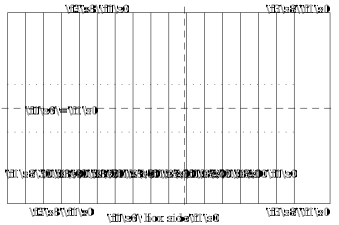
In each diagram, yard lines across the field are drawn at five yard intervals.
In each diagram, the position of the Referee (and Centre Judge if there is one) is based on the assumption that the quarterback is right-handed or the kicker is right-footed. If the quarterback is left-handed or the kicker is left-footed then the Referee should be in the mirror position to the left side (Exceptions:
Note, however, that if a team suddenly changes quarterback or kicker, it is better for the Referee (and Centre Judge) to officiate from the "wrong" side than to try to swap over hurriedly.
1m
1m
1m
1mThe following table summarises which official is in which position 1maccording to the size of the crew and whether it is a normal or 1monside-kick. 1m
| 1mSize | 1mA | 1mB | 1mC | 1mD | 1mE | 1mF | 1mG | 1mH 1m | 1m
|---|---|---|---|---|---|---|---|---|
| 1m | 1m1mdeep centre 1m | 1m1mpylon PB 1m | 1m1mpylon OP 1m | 1m1mTB RL PB 1m | 1m1mTB RL OP 1m | 1m1mTA RL PB 1m | 1m1mTA RL OP 1m | 1m1mwith kicker 1m 1m | 1m
| 1mNormal 1m | 1m||||||||
| 1m3 | 1mR | 1m1m | 1m | 1m | D | 1mL | 1m1m | 1m | 1m
| 1m4 | 1m1m | L | 1mR | 1m1m | D | 1mU | 1m1m | 1m | 1m
| 1m5 | 1m1m | L | 1mR | 1m1m | D | 1mB | 1m1m | U 1m | 1m
| 1m6C | 1mR | 1mL | 1mD | 1m1m | C | 1mB | 1m1m | U 1m | 1m
| 1m6D | 1mR | 1mL | 1mD | 1m1m | S | 1mF | 1m1m | U 1m | 1m
| 1m7 | 1mR | 1mL | 1mD | 1mF | 1mS | 1mB | 1m1m | U 1m | 1m
| 1m8 | 1mR | 1mL | 1mD | 1mF | 1mS | 1mB | 1mC | 1mU 1m | 1m
| 1m | 1m||||||||
| 1mlb s s s s s s s s 1m | 1m||||||||
| 1mn c c c c c c c c. 1m | 1m||||||||
| 1mOnside-kick 1m | 1m||||||||
| 1m3 | 1mR | 1m1m | 1m | 1m | D | 1mL | 1m1m | 1m | 1m
| 1m4 | 1mR | 1m1m | 1m | 1m | D | 1mL | 1m1m | U 1m | 1m
| 1m5 | 1mR | 1m1m | 1m | L | 1mD | 1mB | 1m1m | U 1m | 1m
| 1m6C | 1mR | 1m1m | 1m | L | 1mD | 1mB | 1mC | 1mU 1m | 1m
| 1m6D | 1mR | 1m1m | 1m | L | 1mD | 1mF | 1mS | 1mU 1m | 1m
| 1m7 | 1m1m | L | 1mR | 1mF | 1mD | 1mB | 1mS | 1mU 1m | 1m
| 1m8 | 1mR | 1mL | 1mD | 1mF | 1mS | 1mB | 1mC | 1mU 1m | 1m
1mRL = restraining line; PB = press box side; OP = opposite press box; TA 1m= Team A; TB = Team B 1m 1m
1m
1m
1m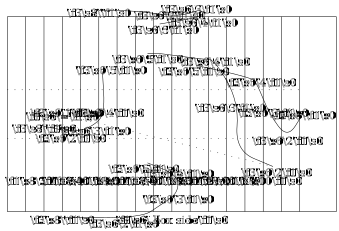 1m
1m
1mAs the ball is kicked off (1) the officials are in their initial 1mpositions. 1mWhile the ball is in flight the officials begin to move to cover their 1mareas of responsibility. 1mThe ball is descending in the Referee's area so they 1mwatch 1mthe potential receivers for fair catch signals. 1mThe other officials watch the blocks by and against the players moving 1mdownfield and for any illegal wedge forming in front of the returner. 1mThe Referee observes the catch of the kick (2) and watches the 1mreturner while they 1mare 1min their area. 1mAs the returner runs across the field (3), the officials adjust their 1mpositions to keep the play boxed in. 1mThe 1m 1mDown Judge 1m 1mand Umpire observe lead blocks on the return until the ball carrier 1mmoves into the 1m 1mDown Judge's 1m 1marea of coverage (4). 1mAt this point the 1m 1mDown Judge 1m 1mtakes the ball until the ball carrier is tackled (5) while the Referee 1mswitches to watching action around the ball carrier. 1mThe Line Judge maintains a wide view of the field. 1m 1m
1m
1m
1m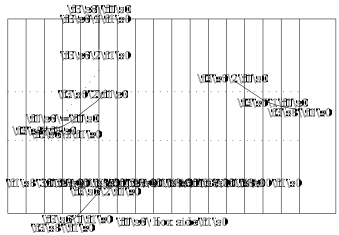 1m
1m
1mWhen the officials see that the ball has been kicked short (1), the 1m 1mDown Judge, 1m 1mUmpire and Line Judge all move into a position to see the ball and action 1maround it. 1mThe Referee moves upfield observing peripheral action. 1mWhen the kick is recovered (2), the 1m 1mDown Judge 1m 1mand Umpire will move rapidly to the dead-ball spot to be prepared to 1mrule on possession. 1mThe Referee and Line Judge continue to monitor action around and away 1mfrom the ball. 1m 1m
1m
1m
1m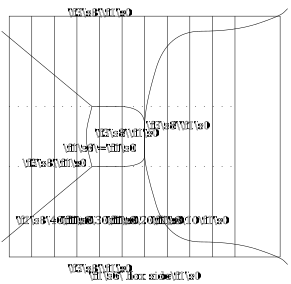 1m
1m
1mOfficials have 1mprimary 1mcoverage of any or all receivers in their area (as shown in the diagram 1mleft), but (with the exception of the Referee, and on long passes, the 1mUmpire) are expected to provide secondary coverage of the area around 1mthe 1mdestination 1mof any forward pass. 1m 1m
1m
1m
1m 1m
1m
1mAs the play develops (1), the Umpire moves back and 1mlaterally to stay 1maway from the hole at the point of attack. 1mAs the ball carrier approaches the neutral zone, the 1m 1mDown Judge 1m 1mtakes over responsibility for them and moves to the dead-ball spot 1mwhen they 1mare 1mtackled (2) to mark the forward progress. 1mThe Umpire and Referee observe action ahead of and around the ball 1mcarrier. 1m 1m
1m
1m
1m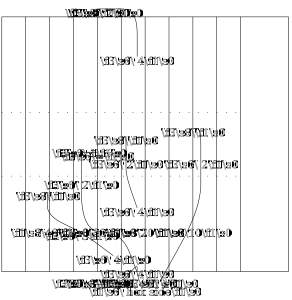 1m
1m
1mAt the snap (1) the officials read their keys to determine what the 1mplay is. 1mOnce it is determined to which side of the field the play is being run 1m(2), the Line Judge makes sure they 1mare 1mwell out of the way and the Back 1mJudge moves across the field to observe lead blocks. 1mThe Umpire turns and watches the play from the inside. 1mWhen the ball carrier turns up field (3), responsibility for them passes 1mfrom the Referee to the Line Judge. 1mThe Referee switches to watching blocks around the ball carrier while the 1mLine Judge follows the ball carrier up the sideline. 1mWhen the ball carrier goes out of bounds (4), the Line Judge marks the 1mdead-ball spot and observes continuing action against the ball carrier. 1mThe Referee and Back Judge move quickly into the vicinity to assist in 1mcoverage, with either 1mgoing into the team area if necessary. 1mThe Umpire moves downfield to cover action around and ahead of the ball 1mcarrier. 1mThroughout the play the 1m 1mDown Judge 1m 1mis responsible for action in the 1mcentre 1mof the field behind the Referee and Umpire. 1m 1m
1m
1m
1m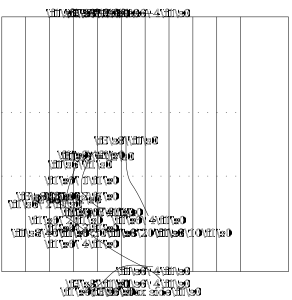 1m
1m
1mThe Referee maintains coverage as the quarterback (Q) rolls out to the 1mLine Judge's side of the field (1). 1mThe Line Judge steps into the backfield to observe the trailing back (P). 1mIf the ball is pitched to the outside back (2) the Referee watches for 1mcontinuing action against the quarterback while the Line Judge takes 1mthe ball and the ball carrier. 1mIf the ball is not pitched then the Line Judge watches the trailing back 1muntil the quarterback crosses the neutral zone (3) and then takes 1mresponsibility for them. 1mThe 1m 1mDown Judge 1m 1mtakes a position to assist on ruling whether the pitch goes backwards 1mor forwards. 1mThe Umpire at all times watches the action at the point of attack and in 1mfront of the ball carrier. 1m 1m
1m
1m
1m
1m 1m
1m
1m
1m
1mAs the quarterback drops back into the pass pocket (1) the Referee drops 1mback correspondingly to keep out of the way, maintaining coverage of 1mplayers in the backfield. 1mThe Umpire steps up into the neutral zone in order to be able to rule on 1mwhether the pass crosses it. 1mThe wing officials 1mstay on the line of scrimmage 1m 1muntil they are confident a pass is going to be thrown that will 1mdefinitely cross the neutral zone. 1m 1mThe Back Judge moves back to keep the potential receivers between 1mthemself and the wing officials. 1mWhen the quarterback throws the ball (2) the Referee must continue to 1mwatch them in case of roughing the passer fouls. 1mThe Umpire turns and watches the pass in flight in order to be able to 1mrule on whether it is caught or incomplete. 1mThe 1m 1mDown Judge 1m 1mand Back Judge also watch the receiver and those around them for 1millegal action. 1mAfter the pass is complete and the ball 1mcarrier is progressing downfield they 1mare 1mthe 1m 1mDown Judge's 1m 1mresponsibility (3). 1mOther officials watch the action around the ball and the Referee cleans 1mup any action remaining around the line of scrimmage. 1mWhen the ball carrier is tackled (4), the 1m 1mDown Judge 1m 1mmoves to the dead-ball spot and the Back Judge assists with coverage and, 1mafter all action has ceased, with relaying a ball to the inbounds spot. 1m 1m
1m
1m
1m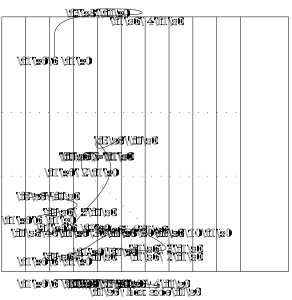 1m
1m
1mAs the officials read pass (1), the Referee backs up to stay clear of 1mthe passer, the Umpire steps up towards the neutral zone and the wing 1mofficials 1mstay on the line of scrimmage. 1mAt the time the pass is thrown (2) the Line Judge and 1m 1mDown Judge 1m 1mare watching for contact between all eligible receivers on their side 1mof the field. 1mWith the pass in the air the Umpire pivots to watch the point where it 1mcomes down and the Line Judge, having determined the most likely 1mreceiver, watches for pass interference, etc. 1mWhen the pass is intercepted by the cornerback (CB) (3), the Line Judge 1mhas responsibility for the ball carrier and the Umpire watches blocking on the 1mreturn (4 and 5). 1mWhen the ball carrier is tackled (6), the Line Judge 1mhas the dead-ball spot and, 1mafter ensuring that there are no continuing action fouls, 1mthe Referee assists in retrieving/relaying a ball to the inbounds spot. 1mThroughout the return the 1m 1mDown Judge 1m 1mobserves action away from the ball and helps with forward progress. 1m 1m
1m
1m
1m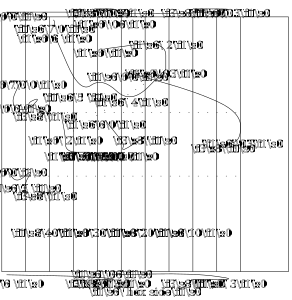 1m
1m
1mAll the officials read pass (1), and the Referee and Centre Judge 1mretreat to stay clear of the passer as they 1mdrop 1mback, while the Umpire steps up a few yards. 1mThe 1m 1mDown Judge 1m 1mand Line Judge hold the line of scrimmage, while the deep officials drop 1mback as receivers run downfield. 1mWhen the pass is thrown (2), all wing and deep officials attempt to 1midentify the destination of the pass. 1mThe pass is intercepted by the cornerback (CB) (3). 1mAt this point, all officials switch to reverse mechanics in order to 1mcover the return. 1mThe Referee, Centre Judge, 1m 1mDown Judge 1m 1mand Line Judge all need to stay ahead of the ball carrier during the 1mreturn (4). 1mThe three deep officials have a lot of ground to make up, especially the 1mSide Judge who has primary responsibility for the ball carrier as they 1mweave 1maround the field (5). 1mWhen the ball carrier is tackled (6), preferably the Side Judge will 1mmark the forward progress spot, but since they 1mare 1mdelayed in doing so, the 1m 1mDown Judge 1m 1mmoves to mark it (7). 1mThe other officials keep the end of the play boxed in, and watch 1mperipheral players for late contact. 1m 1m
1m
1m
1m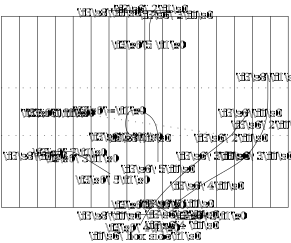 1m
1m
1mThe Referee concentrates on action in the backfield especially against 1mthe kicker after the ball is kicked (1). 1mWhen the ball is kicked the Line Judge moves downfield until they 1mare 1mapproximately 15-20 yards ahead of the return. 1mThe Back Judge remains behind 1mthe deep receiver so that they can observe the catch (2), and then blocks 1min front of the returner (3). 1mThe Line Judge follows the ball carrier until they 1mgo 1mout of bounds (4) with the Referee and Umpire observing action ahead 1mof the ball carrier and the Back Judge watching for continuing action 1mfouls behind and around the ball carrier. 1mThe 1m 1mDown Judge 1m 1mobserves players away from the ball. 1mThe Line Judge is the Coverer and 1mwill mark the dead-ball spot while the Referee and Back Judge assist in 1mreturning the ball to the inbounds spot (5) once all action has ceased. 1m 1m
1m1m(Arrows show direction officials should move if Team A switch to a run/pass formation) 1m 1m
1m
1m
1m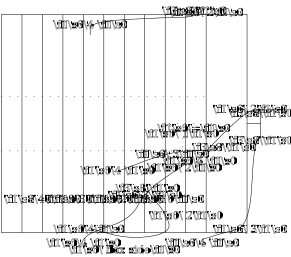 1m
1m
1mThe field goal attempt is blocked behind the line of scrimmage (1). 1mThe Referee immediately responds 1mby moving towards the press box sideline, 1mmaintaining a position clear of action around the ball. 1mThe Umpire stays on the goal line ready to rule if the ball is advanced, 1mand the 1m 1mDown Judge 1m 1malso moves to the goal line for the same reason. 1mThe Line Judge moves towards the corner pylon while the Back Judge moves 1mup to the end line. 1mThe ball is recovered by the defense (2) and advanced away from the 1mend zone. 1mThe Referee has sideline responsibility and covers the ball carrier, 1mwhile the Umpire moves to observe action around the ball carrier. 1mAs the other officials move to cover continuing action away from the 1mball (3) the Referee follows the ball carrier up the sideline until the 1mball carrier 1mis forced out of bounds (4). 1mThe Umpire and Line Judge must get into position to observe action 1maround the ball carrier, even if from a distance. 1mThe Back Judge observes the players still around the original line 1mof scrimmage. 1mThe 1m 1mDown Judge 1m 1mkeeps up with the ball carrier and helps by mirroring the forward 1mprogress spot. 1m
Editor: Jim Briggs, Editor, IAFOA Manual of Football Officiating
jim.briggs.football@gmail.com
Generated: 27/2/2026, 1549
 1m
1m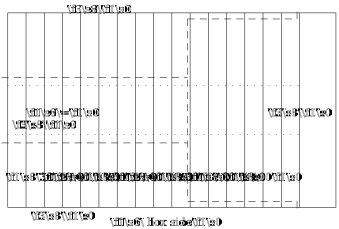 1m
1m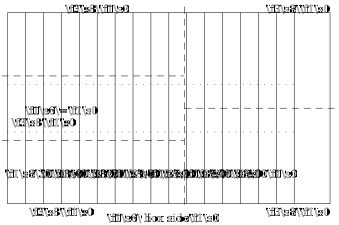 1m
1m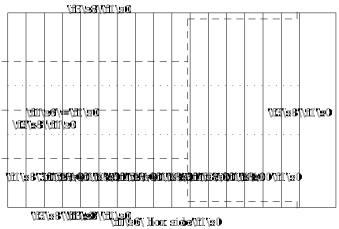 1m
1m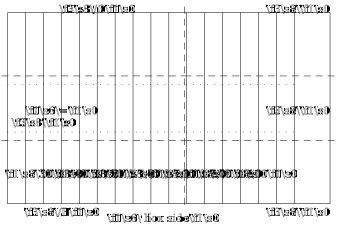 1m
1m 1m
1m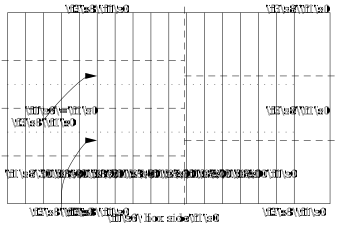 1m
1m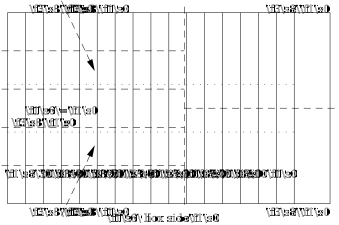 1m
1m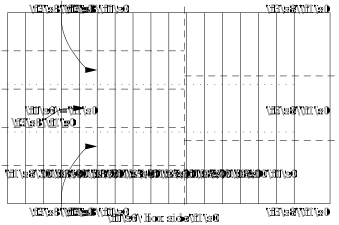 1m
1m 1m
1m 1m
1m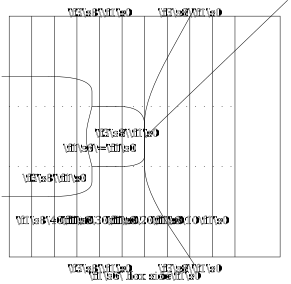 1m
1m 1m
1m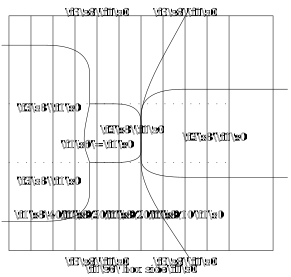 1m
1m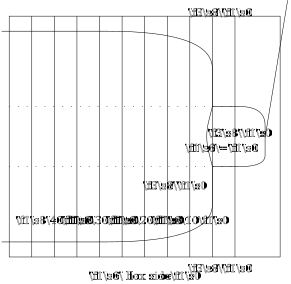 1m
1m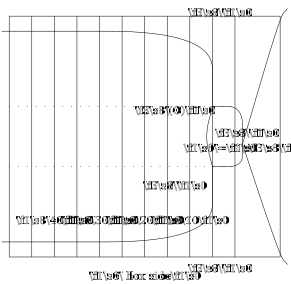 1m
1m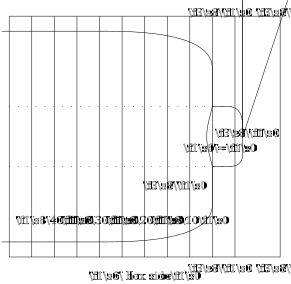 1m
1m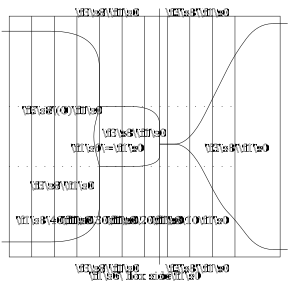 1m
1m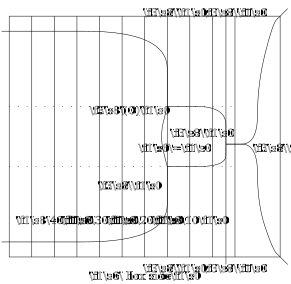 1m
1m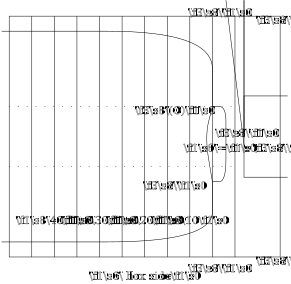 1m
1m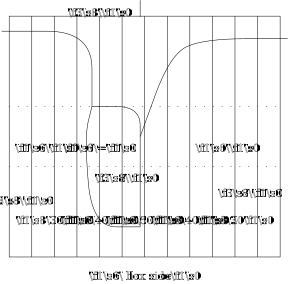 1m
1m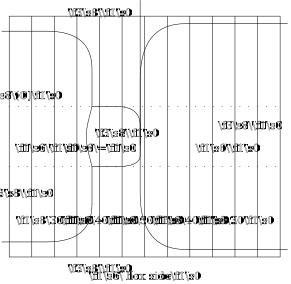 1m
1m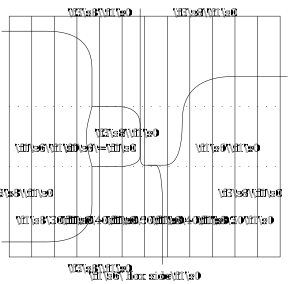 1m
1m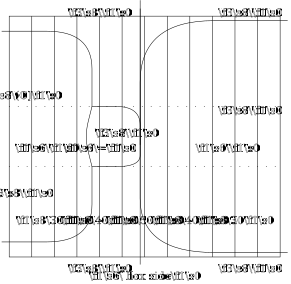 1m
1m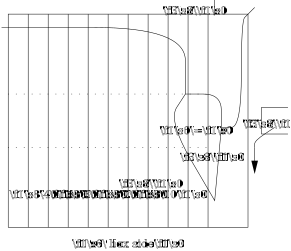 1m
1m 1m
1m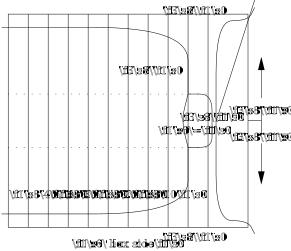 1m
1m 1m
1m 1m
1m 1m
1m